Muscles in TYR
TYR maps exercises to muscles and fatigue zones so your training history becomes easier to understand. The goal is not medical anatomy. The goal is practical training context: what you trained, what may still be fresh, and where your weekly workload is going.
Explore the map
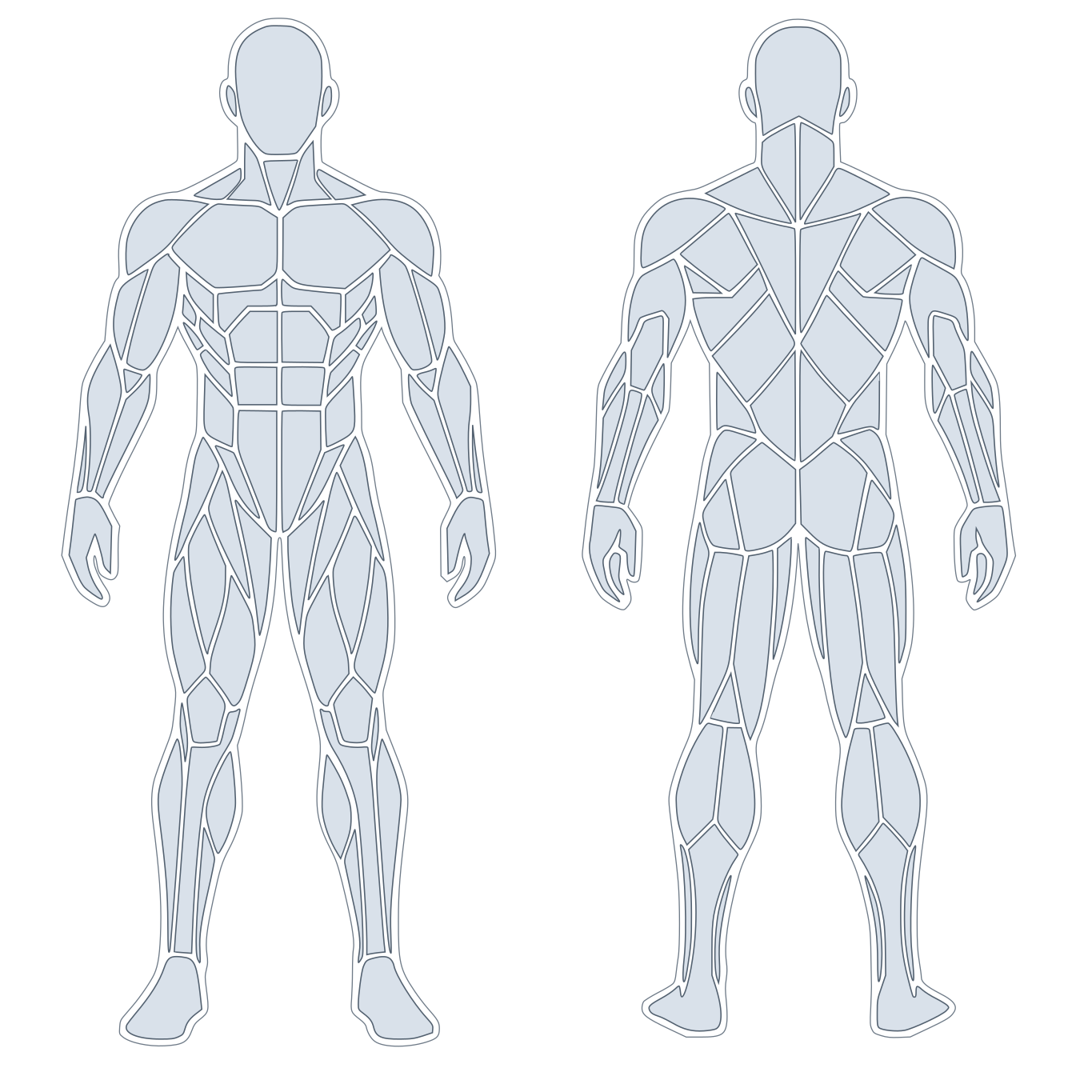
Pick a view, then choose a group, muscle, or fatigue zone. TYR uses these mappings to make workout history easier to reason about.
Main muscle groups
Loading muscle map...
Product detail
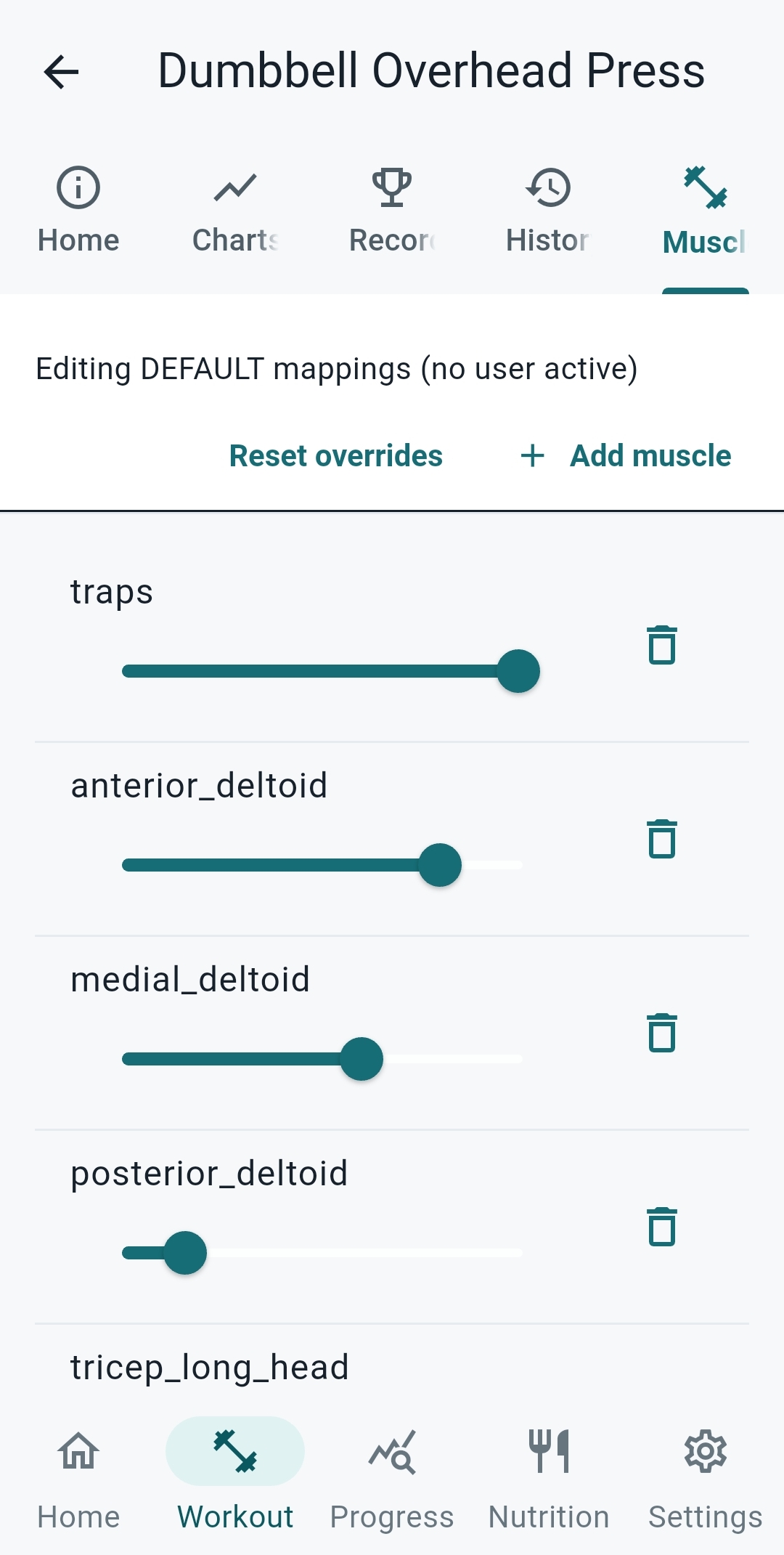
Customizable muscle mappings
TYR starts with default exercise-to-muscle mappings, but you can adjust them. If an exercise hits muscles differently for you, add muscles and move the contribution sliders from 0-100%. The goal is practical training context, not a locked textbook.
Main muscle groups
Main groups are the simplest view. They answer the basic question: did this week lean toward legs, back, chest, shoulders, arms, or core?
Specific muscles
Specific muscles use the detailed region names available in TYR's practical heatmap mapping. They are useful when a broad category hides an important training difference, such as lats versus rhomboids, or anterior versus posterior delts.
Fatigue zones
Fatigue zones are practical training buckets, not medical anatomy. They group muscles by common movement demands: knee-dominant work, posterior-chain work, horizontal pushing, vertical pulling, and other patterns that matter for programming and recovery.
Why this matters
Training balance is easier to see when exercises become structured context. A log can show that your chest is fresh, your posterior chain is still carrying fatigue, or your pulling volume is lagging behind your pressing volume.
Muscle mappings are practical training approximations, not medical diagnostics. Pain, injury, rehab, or unusual symptoms should be handled with a qualified clinician.